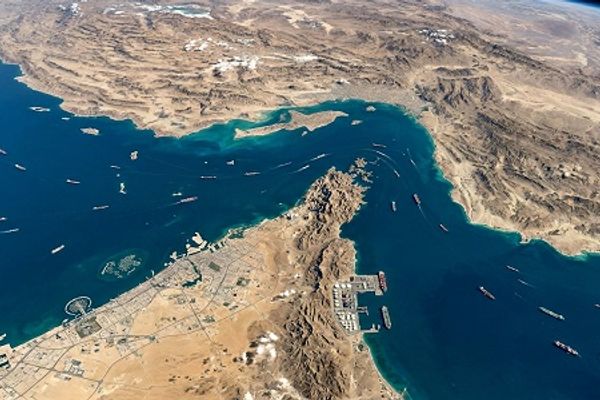
Iran’s declaration that the Strait of Hormuz is fully open to commercial vessels under the current ceasefire has sharply reduced immediate systemic risk for global energy and commodity supply chains. Oil prices have already fallen by nearly 10%, and freight and risk premia are beginning to adjust as traders reassess worst‑case disruption scenarios.
However, access remains time‑limited and procedurally constrained, with the reopening explicitly tied to the remaining ceasefire period and to Iranian‑defined shipping corridors. As a result, while acute supply fears have eased, structural risk and route‑specific volatility are likely to persist in the weeks ahead.
Introduction
Iranian Foreign Minister Abbas Araghchi announced on Friday that “the passage for all commercial vessels through [the] Strait of Hormuz is declared completely open for the remaining period of ceasefire,” provided ships follow a coordinated route set by Iran’s Ports and Maritime Organisation. President Donald Trump publicly welcomed the move, framing the waterway as “fully open and ready for full passage,” while emphasizing that U.S. naval pressure on Iran will continue pending a broader agreement.
The decision follows a Pakistan‑brokered ceasefire framework between the U.S. and Iran and comes after weeks of conflict that had effectively choked off traffic through the world’s most important energy chokepoint, driving oil and LNG prices sharply higher and disrupting bulk trades across the Gulf. With roughly one‑fifth of global oil and a significant share of LNG normally transiting Hormuz, the partial normalization of flows is a critical development for commodity markets worldwide.
🌍 Immediate Market Impact
Spot crude prices reacted aggressively to the reopening headlines. U.S. benchmark crude and Brent both plunged roughly 9–10% as traders unwound a portion of the conflict‑related risk premium embedded since the closure began, while global equity markets rallied on the improved macro outlook. The move follows earlier, more tentative price declines after a two‑week ceasefire was first announced, which had not yet guaranteed free transit.
For now, the announcement signals a step change from “near‑total shutdown” to “managed reopening,” allowing crude, refined products, LNG and some dry bulk cargoes to resume. Nonetheless, route restrictions, sea‑mine clearance operations and ongoing U.S. naval measures against Iranian vessels mean that operational and insurance risks remain elevated. Price volatility is therefore likely to stay high, with intraday swings driven by war‑related headlines and shipping data.
📦 Supply Chain Disruptions
Even with the strait declared open, the backlog of vessels on both sides of Hormuz is substantial. Maritime risk analysts estimate that hundreds of ships, including tankers and bulk carriers above 10,000 DWT, have been loitering or stranded in and around the Gulf due to the earlier closure and subsequent security concerns. Clearing this congestion will take weeks, particularly for large crude and LNG carriers requiring slotting into tightly sequenced loading programs.
Exporters in Kuwait, Iraq, Saudi Arabia, the UAE and Qatar had already curtailed output and declared force majeure on some cargoes as the crisis peaked, removing up to 10 million barrels per day of crude from the market and stranding LNG shipments. While loadings are expected to rise as traffic normalizes, upstream producers and terminals must now coordinate rescheduling, storage drawdowns and demurrage settlements. Port congestion, limited pilotage windows and elevated war‑risk insurance premiums will continue to constrain effective capacity through the corridor in the near term.
On the import side, refiners in Europe and Asia that had scrambled for alternative barrels—particularly from the U.S., West Africa and Latin America—now face a delicate rebalancing of crude slates, inventory policies and hedging strategies. The same applies to buyers of LNG and agricultural commodities that use Gulf ports as transshipment hubs into the Middle East and South Asia.
📊 Commodities Potentially Affected
- Crude oil (Brent, WTI, Dubai) – Directly impacted as roughly 20% of global seaborne crude passes through Hormuz; reopening has already triggered a double‑digit percentage price drop but leaves a residual conflict premium in place.
- Refined products (diesel, gasoline, jet fuel) – Gulf refineries can resume more normal export programs, which should gradually ease product tightness in Europe, Africa and parts of Asia, though retail prices may adjust with a lag.
- LNG – Qatari and other regional LNG cargoes depend heavily on Hormuz; restored transit reduces the likelihood of further force majeure declarations and supports a softening of spot LNG prices, especially into Europe and South Asia.
- Dry bulk grains and feedstuffs – Wheat, corn, barley and soybean meal imported into Gulf states via regional hubs face lower disruption risk, easing concerns about regional food security and freight premiums on these routes.
- Edible oils and sugar – Imports into the Middle East and South Asia that transit the Gulf may experience reduced freight and insurance costs, though price pass‑through will depend on how durable the reopening proves.
🌎 Regional Trade Implications
Gulf exporters of crude, LNG and petrochemicals are the primary beneficiaries of the reopening, regaining access to traditional buyers in Europe and Asia and avoiding deeper demand destruction or long‑term market share loss. European refiners, which had faced sharply higher freight and replacement costs, stand to see improved margins as Gulf flows normalize and backwardation in crude and product curves eases.
Conversely, some short‑term beneficiaries of the disruption—such as U.S., West African and Brazilian crude exporters who captured displaced demand—may see spot differentials narrow as competition from Gulf barrels returns. In dry bulk and agri‑food markets, Black Sea, European and South American grain exporters that had rerouted volumes to cover Middle Eastern demand could face stiffer competition from traditional suppliers using Gulf logistics and storage assets.
Insurance and shipping service providers in neutral or regional mediating countries, including Pakistan, may find increased business opportunities linked to risk management, escort services and specialized coverage for transits along the Iranian‑defined corridor while uncertainty persists.
🧭 Market Outlook
Over the next 30 days, markets will focus on three key variables: the durability of the ceasefire, the pace of ship traffic normalization through Hormuz and progress in mine‑clearing and risk‑mitigation operations. The current opening is explicitly time‑bound to the ceasefire period, and Iranian officials have warned that the waterway could again be restricted if U.S. naval measures are perceived as breaching the deal.
In the very short term, the balance of probabilities favors continued downside pressure on crude and LNG prices compared with crisis peaks, alongside narrower freight and war‑risk spreads, as physical flows resume. But the market is likely to retain a geopolitical risk premium given lingering threats to re‑close the strait and the technical constraints of operating within a single, Iran‑controlled corridor. Commodity traders should expect headline‑driven volatility around upcoming negotiation milestones.
CMB Market Insight
The managed reopening of the Strait of Hormuz marks a decisive but fragile turning point in the 2026 energy and commodity shock. For crude, LNG and key agri‑bulk import routes into the Middle East and beyond, it shifts the narrative from systemic supply loss to constrained normalization, with logistics rather than geology now setting the marginal barrel and tonne.
Strategically, traders, importers and food industry buyers should treat current price relief as conditionally reversible. Positioning, inventory policy and procurement strategies for Gulf‑exposed commodities should continue to embed elevated route‑specific risk assumptions until a durable political settlement—and a fully demilitarized, multi‑lane shipping regime through Hormuz—are credibly established.