
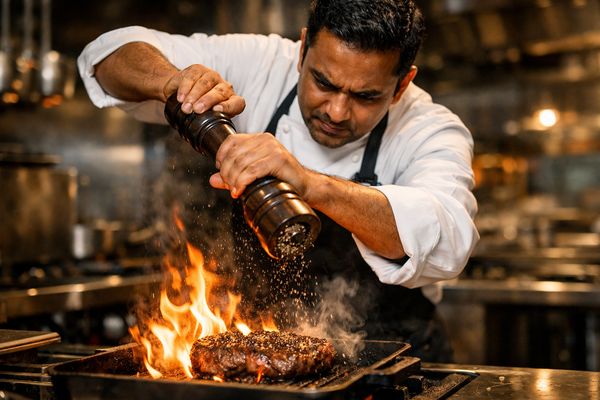
Indian black pepper prices have eased after a strong run, as new‑crop arrivals from Kerala and Karnataka met rising competition from lower‑priced Vietnamese and Sri Lankan origins. The market is shifting from a tight, bullish tone to a more balanced environment where domestic supply, import competition and softer export demand are capping prices. Near‑term direction looks neutral to mildly soft, with a consolidation band expected rather than a sharp correction or renewed rally.
As harvest progress improves availability in India, buyers are showing more price sensitivity and are willing to switch to cheaper origins, especially Vietnam, which continues to act as the global benchmark. While sentiment in the wider spice complex has cooled, underlying demand for Indian Malabar pepper remains structurally intact, suggesting this is a cyclical pause rather than the start of a prolonged downturn.
[cmb_offer ids=305,300,302]
📈 Prices & Spreads
Indian black pepper benchmarks (Merekhara) corrected by about USD 0.11/kg last week to roughly USD 8.14–8.25/kg, giving back part of the gains accumulated earlier in the season. This aligns with a modest softening signalled in recent international reports, where global pepper prices are described as 1–2% lower than a month ago but still historically elevated.
FOB offers confirm the relative advantage of Vietnam over India. Using an approximate EUR/USD of 1.10, current quotes translate into the following indicative levels:
| Origin / Product | Specification | Price (EUR/kg, FOB/FCA) |
|---|---|---|
| India | Black pepper, whole 500 g/l, organic | ≈ 7.27 |
| India | Black pepper, 500 g/l, clean, conventional | ≈ 5.36 |
| Vietnam | Black pepper, 500 g/l, clean | ≈ 5.45 |
| Vietnam | Black pepper, 550 g/l, FAQ | ≈ 5.27 |
| Vietnam | Black pepper, 600 g/l, clean | ≈ 5.64 |
| Sri Lanka | Green dehydrated pepper, organic | ≈ 7.73 |
| India | White pepper, whole, organic | ≈ 6.36 |
| India | Black pepper powder, organic | ≈ 7.91 |
The table underlines the pricing gap: Vietnamese FAQ and clean black pepper remain noticeably cheaper than comparable Indian material, while premium categories (Malabar, white pepper, organics) in India still command a spread but face stronger buyer resistance at current levels.
🌍 Supply & Demand Drivers
India: The key driver of the recent correction is improved domestic availability. New‑crop arrivals from Kerala and Karnataka are steadily increasing as the harvest advances, easing earlier tightness and reducing the urgency among buyers. Farm‑gate and wholesale prices are reacting to this more comfortable supply picture, particularly as speculative interest cools following the strong rally in March.
Import competition: Lower‑priced pepper from Vietnam and Sri Lanka is gaining share in the Indian market. Vietnamese black pepper, already trading at a discount internationally, is now more aggressively priced into India, effectively capping domestic offers. When Vietnam’s export prices soften, Indian exporters struggle to place volume at prevailing domestic levels, which feeds back into weaker spot and mandi prices at home.
Export demand: International interest for Indian origin has moderated. Buyers in Europe and elsewhere remain attracted to Malabar’s quality but are cautious on price after sustained increases. This is visible across the Indian spice complex, where related products such as large cardamom have also eased, reflecting a broader pause in speculative and trade buying rather than any fundamental collapse in demand.
📊 Fundamentals & Weather
Structurally, global pepper fundamentals remain relatively tight but less extreme than during earlier spikes. Recent international assessments indicate that Vietnam’s harvest is underway with peak arrivals in March–April, while prices there are currently 1–2% below last month and roughly 5% below a year earlier, yet still at historically supportive levels.
Weather risks for pepper in the immediate term are limited. In Kerala, short episodes of heavy rain and thunderstorms are forecast, but with the main Indian harvest already progressing, near‑term price formation is being driven more by marketing decisions and inventory management than by weather shocks.
In Vietnam, the ongoing harvest and strong export pipeline suggest that competitive offers will continue in the coming weeks, especially as logistics remain challenging and some exporters adjust flows away from conflict‑affected routes. This combination favours continued global availability of Vietnamese pepper at levels that keep a lid on Indian price recovery.
📆 Short-Term Outlook (2–3 Weeks)
The near‑term outlook for black pepper is neutral to moderately soft. In India, prices are expected to consolidate in a band of approximately USD 7.90–8.40/kg for benchmark grades over the next two to three weeks, reflecting better domestic supply and constrained export demand. A sharp downside break appears unlikely unless a sudden surge in Vietnamese selling or a risk‑off move by speculators triggers forced liquidation.
For a meaningful recovery, the market would need either a reduction in Vietnamese export volumes (e.g. due to logistical issues or farmer stockholding) or a renewed wave of international buying specifically targeting Indian origin. Until then, the competitive discount of Vietnam relative to India is likely to persist, keeping Indian offers under steady pressure.
💹 Trading Outlook & Recommendations
- Importers/European buyers: Use the current consolidation phase to cover short‑ to medium‑term needs, especially in premium Indian Malabar and organic categories, but stagger purchases given the neutral‑to‑soft near‑term bias.
- Indian exporters: Focus on differentiating quality and certifications rather than matching Vietnamese prices outright; consider selective hedging as long as domestic spot holds within the projected USD 7.90–8.40/kg band.
- Industrial users: Given still‑elevated but easing prices, avoid heavy front‑loading; maintain flexible coverage, watching for any sharper correction driven by Vietnamese selling to extend coverage windows.
📍 3‑Day Regional Price Indication (Directional)
- India (Kochi / New Delhi FOB): Mild downward to sideways bias as arrivals continue and export demand stays cautious.
- Vietnam (Hanoi FOB): Largely stable with a slight soft tone; still priced at a discount to India, sustaining competitive pressure.
- Sri Lanka (green and specialty pepper, FOB): Steady to slightly soft, tracking broader regional sentiment rather than local supply shocks.
[cmb_chart ids=305,300,302]
Related posts:
 Mustard Seed Market Softens Despite Tightening Arrivals in India
 Indian Cumin Softens Slightly as Heat Speeds Arrivals, Demand Stays Cautious
 Vietnam Pepper Exports Surge as Supply Tightens and Logistics Bite
 Indian Pepper Prices Hold Firm as Vietnam Export Benchmarks Edge Higher
 Indian Cumin Softens Slightly as New Crop Arrivals Meet Firm Demand
 Indian Pepper Prices Hold Firm as Vietnam Anchors Global Benchmarks
 Indian Cumin Softens as New Crop Flows Meet Cautious Export Demand
 Cumin Market Turns From Rally To Pause As Record Indian Arrivals Meet War‑Driven Export Shock