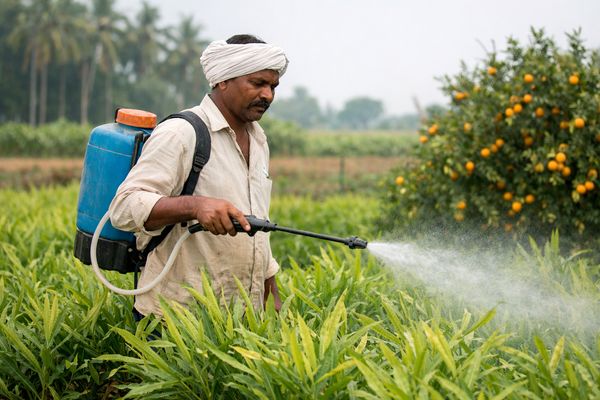
China’s Onedayone Group has launched an on-the-ground pesticide management programme in key ginger and kumquat production regions as the summer season begins, aiming to tighten compliance with strict EU Maximum Residue Limits (MRLs) and reduce export risk. The move comes as China reports multi‑year declines in pesticide intensity but still faces residue-related scrutiny in regulated markets.
Introduction
Onedayone Group China has deployed quality management and technical teams directly into active ginger and kumquat growing areas to advise farmers on correct pesticide selection, application timing and dosage, as well as record‑keeping and field‑level traceability. The programme targets smallholder growers, where gaps in technical guidance often translate into inconsistent on‑farm practices and residue compliance risks at export stage.
This corporate initiative aligns with China’s broader push to reduce pesticide intensity: FAO‑aligned data indicate that pesticide use per hectare in China has fallen for eight consecutive years and is now below or near the world average, even as total output remains high. However, recent EU Rapid Alert System for Food and Feed (RASFF) notices and similar controls on Asian suppliers show that consignments with residues above MRLs can quickly trigger enhanced checks, added costs and reputational damage for exporters.
🌍 Immediate Market Impact
Near term, tighter field-level control by Onedayone is likely to reduce the risk of border rejections and re‑testing for Chinese ginger and kumquat consignments into high‑regulation destinations, particularly the EU. This could support steadier shipment execution and lower compliance‑related logistics costs for shippers aligned with the programme.
EU MRL regimes are among the strictest globally, and increased scrutiny of pesticide residues in fruit and vegetable imports has been evident across multiple origins. By tackling residues at source, Onedayone’s actions may narrow the quality gap between leading integrated exporters and smaller, less‑controlled exporters, potentially leading to a price premium for traceable, low‑residue lots and wider price spreads within Chinese origin.
📦 Supply Chain Disruptions
The initiative is designed more to prevent than to create disruptions. For participating growers, improved pesticide management reduces the likelihood of last‑minute shipment delays arising from failed pre‑export tests or intensified EU inspection frequencies, which have interrupted exports from other Asian origins in recent months.
However, in the short run, stricter internal controls and batch segregation could slow consolidation and raise operational costs, especially where residue tests flag non‑compliant lots that must be diverted to less demanding markets. This may temporarily tighten export‑grade supplies of Chinese ginger and kumquats meeting EU private standard thresholds (often below legal MRLs), while product not meeting these specifications is channeled to domestic or regional markets at discounts.
📊 Commodities Potentially Affected
- Fresh and processed ginger – Primary focus crop; enhanced residue management and traceability may support continuity of shipments to EU buyers that already rely on Chinese origin, stabilising premiums for certified lots.
- Fresh kumquats and citrus specialties – As guidance extends into kumquat regions, compliant volumes for niche citrus exports to Europe could increase, supporting price differentiation versus competing Asian suppliers.
- Other Chinese fruit and vegetables in integrated supply chains – Success in ginger and kumquats may encourage similar field programmes for other export‑oriented crops (e.g. other roots, alliums, berries), gradually raising compliance baselines and influencing contract terms.
- EU import demand for certified low‑residue produce – Retailers and processors facing consumer scrutiny on pesticides may further concentrate sourcing with exporters able to document field practices and residue performance.
🌎 Regional Trade Implications
If Onedayone’s model effectively improves compliance and traceability, Chinese ginger and kumquat exporters participating in the programme could consolidate or expand their share in EU and other high‑value markets, at the expense of suppliers facing more frequent residue non‑compliance. Recent experience from Southeast Asian exporters shows that repeated MRL violations can prompt higher inspection rates and disrupt trade volumes.
Importers in the EU and UK may respond by favouring contract structures with suppliers that can demonstrate field‑level control systems and independent residue data from early in the season. Over time, this could re‑route some EU ginger and niche citrus demand toward Chinese integrated supply chains, while less‑compliant volumes – whether from China or competing origins – gravitate toward markets with looser residue oversight.
🧭 Market Outlook
In the coming months, traders will watch residue test results from early‑season Chinese ginger and kumquat shipments, along with any changes in EU border inspection frequencies or RASFF notifications related to these products. Strong compliance outcomes would lower perceived risk premia on Chinese origin and could compress spreads to competing suppliers.
Medium term, if China’s broader downward trend in pesticide intensity continues and similar field guidance schemes scale across more crops, Chinese fresh produce could strengthen its competitive position in regulated markets despite lingering concerns over isolated misuse cases. Documentation and digital traceability from field to container are likely to become standard expectations in EU buying contracts, influencing investment decisions by exporters and packers.
CMB Market Insight
Onedayone’s field‑based pesticide management programme illustrates how corporate action can intersect with regulatory pressure to reshape horticultural trade dynamics. By moving quality and compliance functions upstream into the field, Chinese exporters are not only protecting immediate access to high‑margin EU outlets but also positioning for a market environment where residue performance and traceability will be central to price formation and contract allocation.
For commodity buyers, the development underscores the need to differentiate between origins – and suppliers within origins – based on demonstrable pesticide governance rather than headline country risk alone. Traders active in ginger, kumquats and broader fruit‑and‑vegetable flows should monitor how quickly such field programmes scale, as this will influence the depth of export‑grade supply from China, the persistence of quality premiums and the competitive balance with other Asian and Southern Hemisphere origins in tightly regulated markets.