
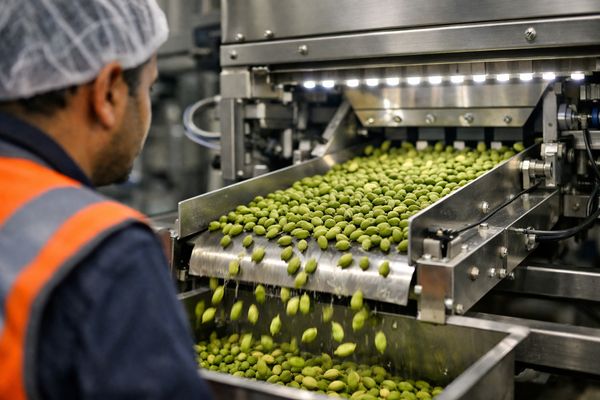
Large cardamom prices in Delhi have eased slightly as buyers step back after a sharp seasonal rally, while green cardamom remains comparatively firm. The market is in a stand‑off: supply from Sikkim and Nepal is still tight, but industrial demand has become increasingly price‑sensitive, capping further upside in the short term.
Demand for large cardamom in Delhi’s wholesale market has thinned this week, with processors and food manufacturers judging current levels as rich after strong gains earlier in the season. Industrial users of savoury blends and rice and meat preparations are trimming inclusion rates or temporarily reformulating to manage margins. At the same time, stockists are reluctant to liquidate inventories at lower levels given unresolved supply tightness in Sikkim and Nepal, creating a narrow and illiquid trading band that is likely to persist in the coming weeks.
Exclusive Offers on CMBroker

Cardamom whole
green,7.5-8 mm
FOB 17.90 €/kg
(from IN)

Cardamom whole
green 6.0-6.5 mm
99%
FOB 16.10 €/kg
(from IN)

Cardamom whole
green 7-7.2 mm
FOB 21.85 €/kg
(from IN)
📈 Prices & Market Structure
In Delhi wholesale trade as of the week ending 21 April, large cardamom (USD converted approximately to EUR) was indicated around EUR 16.4–16.5/kg for Assamese grade, about EUR 18.3/kg for Kanchikad medium, and near EUR 20.1/kg for extra bold grade. These quotations mark a modest softening versus the previous week amid thin volumes and hesitant buying.
In contrast, recent export‑oriented offers for green cardamom ex New Delhi (FOB/FCA, representative sizes) cluster roughly between EUR 15–22/kg, with premium 8 mm lots and organic qualities at the upper end and smaller conventional sizes in the low‑ to mid‑teens per kg. While individual offers are stable to slightly mixed over the past fortnight, the broad picture is one of firmer green grades versus a consolidating large‑cardamom segment.
| Product | Grade / Type | Location / Terms | Indicative price (EUR/kg) |
|---|---|---|---|
| Large cardamom | Assamese | Delhi wholesale | ≈ 16.4–16.5 |
| Large cardamom | Kanchikad medium | Delhi wholesale | ≈ 18.3 |
| Large cardamom | Extra bold | Delhi wholesale | ≈ 20.1 |
| Green cardamom | Whole, 7–8 mm range | New Delhi, FOB/FCA | ≈ 15–22 |
🌍 Supply & Demand Balance
On the supply side, flows from Sikkim’s highlands and Nepal’s eastern hills have not improved materially in recent weeks. Structural tightness after earlier crop shortfalls remains in place, but for now it is masked by subdued offtake. Stockists in consuming centres are well aware of constrained origin availability and therefore prefer to sit on stocks rather than discount aggressively into a thin market.
Demand is clearly the weak leg at present. Large cardamom’s usage profile – primarily savoury rice dishes, meat preparations and masala blends – is heavily industrial and price‑sensitive. As prices crossed key thresholds earlier in the season, food manufacturers responded by cutting inclusion rates or temporarily switching to alternative spice mixes, curbing fresh spot buying and cooling the rally.
📊 Fundamentals & Market Drivers
The recent price softening in large cardamom is therefore best understood as a demand‑led correction after a supply‑driven run‑up. With processors and dal mills on the sidelines, even small offers can push the market lower, yet sellers resist deeper cuts given limited replenishment prospects from origin. This creates a narrow trading corridor supported by tight physicals but capped by fragile downstream margins.
The divergence between large and small (green) cardamom is becoming more pronounced in Delhi. Green cardamom, with its more diversified end‑use in premium beverages, confectionery and retail spice segments, faces relatively inelastic demand and can better sustain elevated levels. Large cardamom, by contrast, behaves more like a functional ingredient where cost‑to‑value calculations are constantly reassessed by industrial users.
🌦️ Weather & Origin Outlook
Weather conditions in the Sikkim–Nepal belt over the coming weeks will be watched closely for their influence on yield prospects and farmer selling behaviour. With no significant improvement in origin availability reported so far, any adverse weather during critical growing phases could quickly re‑ignite supply concerns. For now, however, the immediate pricing tone is governed more by demand rationing than by fresh weather shocks.
📆 Short-Term Forecast (2–4 Weeks)
- Price path: Large cardamom is expected to trade range‑bound at slightly softened levels, with limited downside as long as supply remains tight and stockists resist aggressive selling.
- Demand recovery: A more convincing rebound is likely to hinge on renewed buying from dal processing mills, spice blenders and masala manufacturers as the festive calendar approaches.
- Divergence risk: The current divergence between firm green cardamom and consolidating large cardamom may widen further if industrial demand for the latter stays muted.
🧭 Trading Outlook & Recommendations
- European spice blenders & masala manufacturers: Use the present hesitation to secure partial coverage for Q2–Q3 on large cardamom, focusing on medium and extra‑bold grades, but stagger purchases over the next few weeks to benefit from any further demand‑led dips.
- Industrial users in savoury applications: Maintain flexible formulations; be ready to restore normal inclusion rates if prices soften further within the current range, as structural supply tightness may reassert later in the year.
- Stockists & traders: Avoid heavy destocking at discounted prices; with origin supply still tight, carrying moderate inventories into the pre‑festive demand phase remains a defensible strategy.
📉 3‑Day Price Indication (Directional)
- Delhi wholesale – large cardamom (all grades): Sideways to slightly soft in EUR terms, reflecting ongoing thin demand and limited fresh buying.
- Delhi export corridor – green cardamom: Largely stable in EUR with a firm undertone for premium 7–8 mm grades, supported by steady demand and no major change in recent offer levels.
Related posts:
 Large Cardamom Softens as Retail Demand Pauses and Iran Trade Stalls
 Indian Green Cardamom: Delhi FOB Holds Firm Despite Softer Auctions
 Indian Green Cardamom Firms in Delhi as Auction Prices Stabilise
 Indian Cardamom Edges Softer as Delhi FOB Eases, Exports Stay Strong
 Coriander Seeds: Egyptian FOB Steady While Indian Grades Ease Slightly