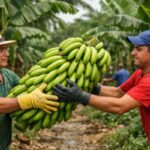
Costa Rica’s pineapple market is heading into a supply-heavy window driven by natural flowering, with a mid‑cycle production gap expected later and margins pressured by higher costs and a strong colón. Prices remain relatively firm thanks to robust juice demand, but the coming volume peak will test price stability in Europe and North America.
The global pineapple complex is currently shaped by Costa Rica’s dominant export role, logistics cost inflation and resilient industrial demand for juice concentrate. Natural flowering is concentrating fruit availability over the next 20–22 weeks, creating an oversupply risk that could briefly soften fresh prices even as processors and blenders welcome improved raw material availability. At the same time, exporters face structurally higher freight and energy costs, potential fertiliser constraints and a sharply appreciated local currency, all of which erode profitability and limit room for price discounting. Buyers must navigate this tight margin environment while positioning ahead of an anticipated production gap around week 20 of the cycle.
Exclusive Offers on CMBroker

Pineapple dried
FOB 6.75 €/kg
(from VN)

Pineapple dried
normal sugar, 8-10 mm
FCA 3.90 €/kg
(from NL)

Pineapple dried
normal sugar, 5-7 mm
FCA 4.00 €/kg
(from NL)
📈 Prices & Market Mood
Fresh pineapple prices in Central Europe, Mediterranean markets and the United States are described as stable to firm, especially for higher value-added categories, despite the approaching supply bulge. Industrial demand for pineapple juice has underpinned raw fruit values, preventing a deeper correction even as volumes recover in 2026.
In processed segments, recent offers for dried pineapple in Europe show slightly softer levels, indicating modest margin relief for downstream users. FCA Netherlands offers for Thai dried pineapple are around EUR 3.90–4.00/kg, while FOB Vietnam indications are about EUR 6.75/kg, both broadly flat over April with a mild easing from early-month levels. This contrasts with structurally tight fresh markets, where elevated logistics and origin costs keep wholesale price ideas relatively high.
| Product | Origin | Location / Terms | Latest Price (EUR) | 1–4 Week Trend |
|---|---|---|---|---|
| Pineapple dried | Thailand | NL, FCA | 3.90–4.00/kg | Slightly softer, then stable |
| Pineapple dried | Vietnam | VN, FOB | 6.75/kg | Marginal easing vs early April |
🌍 Supply & Demand Dynamics
Natural flowering triggered by thermal stress is synchronising fruit development across large parts of Costa Rica’s plantations. This generates a predictable but disruptive surge in harvest-ready fruit roughly 20–22 weeks after flowering, with the current cycle now moving into that concentration window. Producers such as Tropicales del Valle are running at full capacity in anticipation of a significant volume peak.
Once this wave passes, the industry expects a pronounced production gap around week 20 of the current cycle, reflecting the early “pull forward” of fruit into the flowering peak. This will temporarily thin exportable volumes and could tighten supply for European and North American buyers. Climate change has made the timing and intensity of these flowering events less predictable, increasing planning risk for both producers and importers.
On the demand side, industrial buyers have become a critical stabilising force. A structural decline in global orange availability has pushed juice blenders to use more pineapple concentrate as a substitute, supporting steady growth in pineapple juice demand globally. Recent market reports suggest pineapple juice concentrate now accounts for a meaningful share of the natural fruit juice concentrate segment, with Europe representing a key processing and consumption hub.
📊 Costs, Currency & Weather
Producer margins in Costa Rica are under sustained pressure from several structural cost drivers. Freight rates remain elevated, with container shortages, higher inland transport costs and fuel surcharges complicating medium- and long-term commercial planning for exporters. Rising energy prices, partly related to ongoing geopolitical tensions in the Middle East, further inflate packing and cold-chain costs.
The sector is also monitoring potential fertiliser shortages linked to global logistics disruptions, which could raise input costs or constrain yield optimisation. At the macro level, the sharp appreciation of the Costa Rican colón against the US dollar to multi-decade highs is eroding the local-currency value of export revenues, tightening cash flow and debt-servicing capacity for growers and packers whose contracts are largely USD-denominated.
Weather conditions across key tropical production zones are mixed. In Costa Rica, recent meteorological bulletins highlight unstable, moisture-rich conditions and the passage of a tropical wave bringing variable-intensity rains over Pacific regions. In Thailand, by contrast, significantly below-average rainfall in main pineapple regions such as Prachuap Khiri Khan and Rayong is creating notable water stress and raising risks of smaller fruit and lower sugar content. These divergent patterns could partly offset Costa Rican oversupply risk on a global basis if Thai yields disappoint.
🇪🇺 Europe’s Central Role
Europe remains the primary strategic outlet for Costa Rican pineapple, both in fresh fruit and in juice and concentrate flows feeding the beverage and foodservice sectors. Despite squeezed origin margins, leading exporters remain committed to servicing European programs, with some considering new production areas to smooth seasonal imbalances for the remainder of 2026.
Market intelligence from European traders indicates that spot fresh prices are currently stable, with little sign of panic selling ahead of the flowering-related peak. However, the combination of Costa Rica’s dominant share and ongoing logistics fragility means European buyers remain highly sensitive to any disruption in sailings or port operations. Diversification into complementary origins such as Ecuador and other Latin American suppliers provides only partial relief, as their capacity to replace Costa Rican volumes is still limited.
📆 Outlook & Trading Ideas
In the near term, the key risk is a temporary oversupply of fresh pineapple as the natural flowering cohort hits export channels over the next several weeks. If European and North American retail and foodservice demand cannot fully absorb the additional fruit, spot prices may soften, especially for lower-grade or surplus volumes. Industrial buyers of juice and concentrate are likely to use this window to extend coverage, although strong underlying demand from the juice sector will limit the downside.
Over a 6–12 month horizon, the interaction of climate-driven supply volatility, elevated logistics and energy costs, and the strong colón suggests that producer margins will remain tight unless export prices rise meaningfully. The expected production gap after the current peak could temporarily tighten availability in mid‑cycle weeks, creating a more supportive price environment for origin sellers and potentially strengthening fresh and concentrate quotations into late 2026.
💡 Trading Outlook
- Fresh importers (EU & US): Use the upcoming oversupply window to negotiate modest price improvements or upgraded quality, but avoid overstocking ahead of the expected production gap around week 20.
- Juice and concentrate buyers: Gradually extend coverage during the volume peak, focusing on securing Q3–Q4 needs while preserving flexibility in case freight rates ease later in 2026.
- Producers and exporters: Prioritise high-yield programs and cost control, hedge FX exposure where possible, and explore differentiated product or certification premiums to offset compressed margins.
- Dried pineapple traders: Take advantage of slightly softer EUR prices to build limited forward positions, but monitor Thai weather and Costa Rican shipping reliability closely for potential reversals.
📍 3‑Day Directional Price View (EUR)
- EU fresh wholesale (Costa Rica origin): Sideways to slightly softer as additional volumes arrive, with limited downside due to high costs.
- EU dried pineapple (warehouse NL, FCA): Largely stable around EUR 3.90–4.00/kg; no sharp moves expected in the next three days.
- FOB Costa Rica (fresh export parity): Nominal indications steady; realisation pressured more by margins than by headline price cuts in the very short term.