
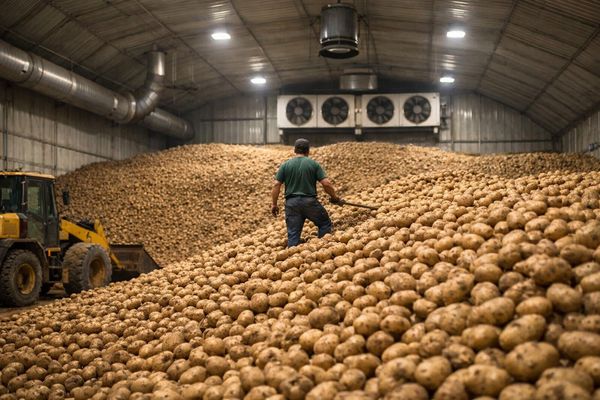
Wholesale potato prices in Brazil have spiked at the end of April 2026 as the rainy‑season harvest winds down, tightening supply across major wholesale hubs and lifting ágata potato values sharply. This short‑term squeeze, combined with weather and pest risks in Paraná, is set to keep the market firm at least through May, despite structural concerns over long‑term farm profitability.
Brazil’s potato market is entering a seasonally vulnerable window. As volumes from the rainy‑season harvest decline, wholesale supply into São Paulo, Rio de Janeiro and Belo Horizonte drops just as demand from retail and foodservice remains steady. At the same time, dry‑linked yield and pest risks in Paraná could deepen the current supply gap, while irrigation investment in Rio Grande do Sul offers only medium‑term relief. For buyers, this means a period of elevated prices and reduced negotiation power, even as producers continue to grapple with thin margins.
Exclusive Offers on CMBroker

Potato starch
powder
FCA 0.85 €/kg
(from PL)
📈 Prices & Short-Term Dynamics
In the final week of April 2026, wholesale prices for special ágata potatoes in São Paulo jumped by nearly 40% week on week, with parallel gains reported in Rio de Janeiro and Belo Horizonte. This confirms that the rally is broad-based across Brazil’s main distribution centres rather than a localised event.
The driver is a classic inter-harvest gap: as the rainy-season crop finishes, incoming volumes shrink faster than demand adjusts, tightening physical availability. With this gap expected to persist, elevated wholesale price levels are likely to be maintained through May 2026, especially for ágata, which is heavily used by retailers and foodservice operators.
🌍 Supply & Regional Production Risks
The Brazilian potato calendar is now transitioning from rainy-season to dry-season and winter cycles. During this handover, reduced inflows from producing regions directly translate into lower supply in key wholesale markets, reinforcing the current price support. The timing of this shift is central to understanding why the late-April rebound has been so abrupt.
In Paraná, growing areas around Curitiba, Irati and Ponta Grossa are under pressure from earlier rainfall deficits and uneven moisture distribution, which have constrained tuber development at a critical stage. Although short-term forecasts now show increased cloud cover, showers and thunderstorms over the coming week, these rains arrive after a period of stress and may not fully repair yield losses already embedded in the crop.
Dry conditions have also accelerated pest migration from neighbouring crops into potato fields, forcing growers to intensify phytosanitary treatments. This combination of moisture stress and higher pest pressure raises the risk of below-normal yields in Paraná’s current cycle, potentially extending the supply tightness beyond the initial May horizon if damage is significant.
📊 Structural Factors & Processing Linkages
Rio Grande do Sul is taking a different trajectory, advancing a state-backed irrigation incentive programme that is now in its third phase. The scheme finances reservoir construction and on-farm irrigation expansion, aiming to reduce production volatility and increase self-sufficiency in grains and vegetables, including potatoes. Over a 6–12 month horizon and beyond, expanded irrigation should improve supply stability, though the benefits will materialise gradually.
At the sector level, Brazil’s potato industry faces a recurring structural dilemma: productivity gains lift national output, but higher supply tends to suppress wholesale prices and compress grower margins. This tension between efficiency and profitability is particularly acute in a market where producers have limited price-setting power at the farm gate, even during temporary rallies like the current one. Engagement across the chain—growers, traders, processors and retailers—remains crucial to address this imbalance.
In Europe, spot values for potato-derived ingredients remain relatively stable. For example, potato starch offered FCA Łódź, Poland, is quoted around EUR 0.85/kg at the end of April 2026, unchanged over the past week and only modestly higher than early April levels. This underlines that Brazil’s fresh potato price spike is a domestic phenomenon with limited direct impact on European starch or processed markets in the near term.
📣 Demand, Industry Events & Sentiment
On the demand side, Brazil’s potato consumption remains resilient, supported by strong utilisation in household cooking and foodservice. Local gastronomic festivals in Minas Gerais are actively promoting potato-based dishes, helping sustain consumer interest and providing useful signals on evolving taste and usage patterns for retail and foodservice buyers.
Industry dialogue is being maintained through sector events such as the upcoming ABBIN regional meeting in São Francisco de Paula, Rio Grande do Sul. There, growers, traders and processors are expected to discuss price and cost developments ahead of the winter production cycle, exchanging intelligence on input costs, risk management and marketing strategies. While growers in Paraná are already adapting field management to cope with pest and moisture challenges, structured buyer commentary on the current price rally remains limited.
📆 Market Outlook
In the near term, the end-of-harvest supply gap is set to keep Brazilian wholesale potato prices elevated through May 2026, with ágata varieties retaining a premium in major hubs. The main upside risk lies in Paraná: if earlier dryness and pest damage translate into meaningful yield losses, tightness could persist into the winter crop window, particularly in regions most exposed to the recent stress.
Over a 6–12 month horizon, the pace and effectiveness of irrigation expansion in Rio Grande do Sul will be an important structural variable to monitor. However, even if weather-related volatility eases, the deeper challenge of aligning productivity gains with sustainable farm profitability will continue to shape investment decisions and consolidation trends in the sector. Given Brazil’s limited role in global fresh potato trade, international price spillovers should remain contained, though the underlying climate and infrastructure themes are widely relevant to other producing regions.
🧭 Trading & Procurement Outlook
- Brazilian buyers: Anticipate firm to higher prices through May; consider advancing purchases for ágata volumes where storage and cash-flow allow, while maintaining flexibility in sizing and quality specs to secure supply.
- Growers: In Paraná, prioritise integrated pest management and water-use efficiency to protect yields; use current price strength to lock in margins where possible, but be cautious about over-expansion given structural price pressure in oversupplied years.
- Processors and importers: Expect limited direct impact on European and Asian markets; monitor Brazil mainly as a case study for managing climate and infrastructure risk rather than as a key supply source.
📍 3-Day Directional Price Indication (EUR)
| Market | Product | Direction (next 3 days) | Comment (EUR context) |
|---|---|---|---|
| São Paulo (Brazil) | Fresh ágata potatoes | ⬆️ / ⬆️⬇️ | After ~40% weekly surge, further upside possible but pace likely to slow; levels remain high in EUR terms. |
| Rio de Janeiro & Belo Horizonte | Fresh ágata potatoes | ⬆️ | Follow-through gains expected as supply gap and spillover from São Paulo support quotations. |
| Łódź (Poland) | Potato starch (FCA) | ➡️ | Offers steady around EUR 0.85/kg; little short-term influence from Brazil’s fresh market rally. |
Related posts:
 European Potato Market: Dry Start to Season Keeps Prices Supported
 Polish Potato Starch Prices Hold Firm as Weather Turns Colder and Dry
 Potato Markets Under Pressure: Why Post‑Harvest Value Now Matters Most
 Tighter Spring Window Supports Firm Potato Prices as California Leads
 Potato Oversupply in Poland: Crisis for Growers, Stable Starch Prices
 Taiwan’s New Potato Import Rules Support Trade While Oversupply Caps Prices
 Polish Potato Starch Prices Hold Firm as Spring Season Begins
 Polish Potato Market under Heavy Pressure from Surplus Stocks