
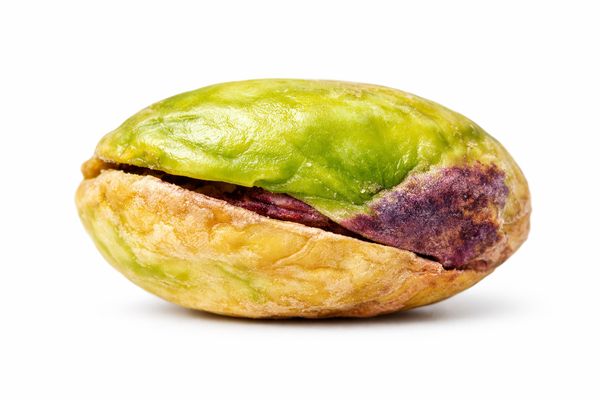
Global pistachio prices are elevated as Iranian export disruptions and firm demand tighten available supply, creating a favorable window for new origins such as South Africa’s fast‑expanding Karoo orchards. With South African farmgate values tracking global benchmarks and producers considering delayed sales into a rising market, the near‑term tone remains broadly bullish, albeit with high geopolitical risk.
Strong demand growth, war‑related logistics issues around Iran, and tightening U.S. inventories support a firm price environment into late 2026. Against this backdrop, South Africa is scaling from experimental volumes toward a potential 60,000 t industry within a decade, leveraging counter‑seasonal supply and export‑oriented financing structures. Market participants should prepare for continued volatility around Iran‑linked headlines, while monitoring how much incremental volume South Africa and California can realistically add over the medium term.
Exclusive Offers on CMBroker

Pistachio inshell
Ahmadaghaei, 24-26
FOB 9.50 €/kg
(from IR)

Pistachio inshell
Ahmadaghaei, 28-30
FOB 9.26 €/kg
(from IR)

Pistachio inshell
Ahmadaghaei, closed mouth, 24-26
FOB 7.01 €/kg
(from IR)
📈 Prices & Market Mood
South African pistachio prices currently mirror elevated global benchmarks, with recent transaction levels reported around US$36/kg (≈€33–34/kg) in early 2026 at origin. This aligns with spot offers for Iranian in‑shell pistachios around €9–10/kg FOB Tehran for standard grades, implying a substantial value uplift once quality, processing and downstream margins are included. Rising replacement costs and risk premia linked to Iran’s export difficulties underpin a broadly firm tone across major consuming regions.
Recent disruption of Iranian exports amid the ongoing war and intermittent constraints around the Strait of Hormuz have pushed international pistachio prices to their highest levels in roughly eight years. Trade reports indicate price gains of 20–30% in key import markets such as India, while retail prices in the U.S. and EU have climbed markedly over recent months. Futures and OTC buyers are increasingly paying up for origin diversification and reliable logistics, reinforcing a risk‑on environment for sellers.
Key price signals (indicative, converted to EUR)
| Product | Origin | Terms | Recent level (EUR/kg) | Trend |
|---|---|---|---|---|
| Pistachio inshell Ahmadaghaei 24–26 | Iran | FOB Tehran | ≈€9.5 | Stable at elevated level |
| Pistachio inshell Ahmadaghaei 28–30 | Iran | FOB Tehran | ≈€9.3 | Stable at elevated level |
| Pistachio inshell Ahmadaghaei closed‑mouth 24–26 | Iran | FOB Tehran | ≈€7.0 | Stable at elevated level |
| Farmgate & early export deals | South Africa (Karoo) | Ex‑farm/export | ≈€33–34 | Firm, sellers testing higher |
🌍 Supply & Demand Dynamics
Global pistachio supply remains highly concentrated: the United States, Iran and Turkey together account for more than 85% of world output, leaving the market exposed to regional weather, water and geopolitical shocks. The 2025 crop in California was large, but the current 2025/26 marketing year has seen strong shipment growth—U.S. kernel shipments were up more than 11% year‑on‑year by mid‑April—while industry reports highlight tightening spot availability as a large share of inventory is already committed.
At the same time, lower production and significant export constraints in Iran and, to a lesser degree, Turkey have reduced competing supplies into the Middle East and Asia. Conflict‑related shipping disruptions and sanctions‑related frictions are slowing cargo flows and raising transaction risk, encouraging buyers to seek alternative origins and to build precautionary stocks. This demand re‑routing supports prices for U.S. and emerging Southern Hemisphere supplies and has accelerated interest in South Africa as a counter‑seasonal, politically more neutral source.
On the demand side, structural trends remain positive: pistachios benefit from their positioning as a healthy snack, plant‑based protein and ingredient in confectionery and dairy alternatives. New consumption channels—including on‑the‑go snacking, premium bakery and ice‑cream products—have helped lift the global market value to roughly €5–6 billion, with projections toward about €7 billion by 2031. Even at higher price points, demand destruction has so far been limited, with most buyers focusing instead on product mix and pack‑size adjustments to protect margins.
📊 Fundamentals: South Africa’s Karoo Expansion
South Africa is rapidly emerging as a meaningful new origin, with orchards expanding across the Northern Cape’s Karoo region. Current production is still very small—around 20 t last year—but project developers plan to reach up to 60,000 t annually within the next decade, aiming for 5–8% of global market share. If realized, this would place South Africa alongside established second‑tier producers and significantly diversify world supply.
The Karoo offers a combination of hot summers, sufficient winter chill, low rainfall and access to controlled irrigation from the Orange River—conditions well aligned with pistachio agronomy. Water remains a structural constraint, but pistachios’ relative drought tolerance allows orchards to survive periods of stress and resume production when irrigation resumes, supporting long‑term project resilience. Developers are also investing in outgrower models, positioning pistachios as a diversification option for farmers struggling with the competitiveness and climate risk of traditional corn and wheat rotations.
Financially, the sector is being built on patient, crop‑cycle‑aligned capital. With breakeven around year eight and productive lifespans exceeding 50 years, dedicated funding vehicles are structured so that debt service begins only once orchards generate income. Establishing 2,000 ha of orchards is estimated to require close to €49–50 million, supporting around 800 direct and indirect jobs for every 1,000 ha developed and embedding pistachios into a broader rural‑development narrative. This financial engineering helps absorb early‑year cash flow risk and should enable steady capacity build‑out as long as prices remain supportive.
🌦️ Weather & Risk Factors
Across key Northern Hemisphere regions, recent weather has been mixed but broadly adequate for pistachio development. In California, pollination in early to mid‑April followed a winter with localized rain and cool spells; while some orchards experienced weather‑related stress, current assessments still point to a solid, though likely smaller, 2026 crop compared with the 2025 bumper harvest. In the Middle East, variable precipitation and ongoing conflict‑related disruptions in Iran add uncertainty to both yield prospects and logistical execution for the 2026/27 season.
For South Africa’s Karoo, pistachio development remains largely irrigation‑driven, with the main weather risks tied to heat extremes and potential future constraints in the Orange River system rather than immediate seasonal anomalies. Medium‑term climate projections continue to signal higher variability in rainfall and temperature across semi‑arid zones globally, reinforcing the importance of water‑efficient irrigation technology, storage infrastructure and adaptive management. Any prolonged drought or policy‑driven limits on water extraction could slow the pace of the country’s pistachio expansion and tighten global balances further than currently anticipated.
📆 Trading & Strategy Outlook
With prices already high and risk premia embedded, the pistachio market is in a “tight but not yet broken” phase. The combination of constrained Iranian exports, firm U.S. shipments and a likely smaller 2026 California crop suggests limited downside in the near term unless there is a rapid de‑escalation in the Iran conflict or an upside surprise in yields. South Africa’s incremental volumes are too small in 2026 to materially loosen the market, but the signaling effect of its 60,000 t ambition is beginning to shape medium‑term expectations.
- Importers/roasters: Use price dips on positive Iran‑news days to extend coverage into early 2027, prioritizing diversified origin portfolios (U.S., Turkey, South Africa, and smaller origins) to reduce geopolitical concentration risk.
- Retailers/FMCG: Focus on mix management—smaller pack sizes, premium flavored lines and selective promotions—rather than aggressive price discounting; lock in supply with flexible volume bands and quality specifications.
- Producers (incl. South Africa): Consider staged selling strategies; with local prices tracking global benchmarks and some buyers already seeking diversification, a policy of holding back a portion of stock for potential late‑year premiums appears justified but should be balanced against liquidity needs.
- Investors/lenders: Align financing tenors with the 8‑year breakeven and 50‑year orchard life; stress‑test projects against scenarios of normalized prices and tighter water availability, not just today’s elevated levels.
📍 3‑Day Directional Outlook (EUR‑based)
- EU import market (CIF, kernels & in‑shell): Sideways to modestly firmer; traders are wary of fresh Iran‑related headlines, but near‑term physical liquidity is adequate.
- FOB U.S. West Coast: Firm bias; tightening uncommitted inventory and smaller expected 2026 crop support offers, especially for higher grades.
- Emerging South African export offers: Firm to slightly higher; sellers are testing the market’s willingness to pay premiums for counter‑seasonal, diversified origin product amid ongoing global tightness.
Related posts:
 Middle East Conflict Pushes Pistachio Prices to Multi‑Year Highs
 South Africa’s Pistachio Gamble: New Supply in a Tight Global Market
 Salmonella Recall in Canada Meets Tight Global Pistachio Supply
 Iranian Pistachio Gap Keeps Europe Tight Despite Diplomatic Hopes
 Bright Green Gap: How Iranian Pistachio Disruptions Are Reshaping Europe’s Market
 War-Driven Supply Shock Pushes Pistachios to Eight-Year Highs
 Spain Opens Door to China: What the New Pistachio Protocol Means for Prices