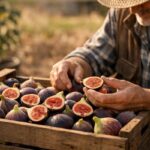
Turkish dried fig prices are holding broadly steady on FOB Malatya basis, with weak export demand and quality concerns preventing any meaningful upside in the short term.
Trading in Turkish dried figs remains subdued despite stable price indications across most sizes and qualities. Exporters report slower overseas buying and are cautious about residual stocks that may face tighter mycotoxin controls, especially in the EU. At the same time, weather in the main fig-growing provinces is currently favourable for tree development, reducing near‑term supply risk. With no major price impulses from either demand or weather, the market is likely to remain range‑bound over the coming days, with buyers able to secure volume without paying a premium.
Exclusive Offers on CMBroker

Figs dried
no: 7, lerida
FOB 7.60 €/kg
(from TR)

Figs dried
no: 6, natural
FOB 7.80 €/kg
(from TR)

Figs dried
no: 5, natural
FOB 8.20 €/kg
(from TR)
📈 Prices & Recent Moves
Latest FOB Malatya offers for conventional Turkish dried figs (origin TR) are broadly flat versus late April, with natural No. 5 around EUR 8.2/kg, No. 4 at about EUR 8.8/kg and larger natural No. 1 near EUR 9.6/kg. Lerida types are similarly steady, with mid-range sizes around EUR 8.0–8.7/kg and top sizes close to EUR 10.0/kg. These levels reflect a consolidation after earlier cuts in April, when sellers tried to stimulate buying interest.
| Product | Quality / Size | Location / Terms | Latest Price (EUR/kg) | WoW Change |
|---|---|---|---|---|
| Dried figs | Natural No. 5 | Malatya, FOB | 8.20 | Stable |
| Dried figs | Natural No. 1 | Malatya, FOB | 9.60 | Stable |
| Dried figs | Lerida No. 4 | Malatya, FOB | 8.70 | Stable |
| Dried figs | Lerida No. 1 | Malatya, FOB | 10.00 | Stable |
🌍 Supply, Demand & Trade Flows
Recent industry commentary points to weak export demand for Turkish dried figs this season, with trade described as sluggish and current shipments significantly below last year’s volumes. Exporters are cautious about taking on additional raw material because of the perceived risk that some lots may show elevated aflatoxin or ochratoxin levels, which would struggle to pass destination-country checks.
On the supply side, Turkey remains the dominant global origin, with 2025/26 dried fig production projected around 70,000 tonnes, up from 60,000 tonnes in 2024/25, and total national supply expected to increase to roughly 75,000 tonnes. Larger availability combined with below‑par export offtake is translating into comfortable stocks and a buyers’ market tone. Global market intelligence also notes that import controls for higher‑risk dried fruits are tightening, raising testing and compliance costs and further discouraging speculative buying.
🌦 Weather & Crop Conditions (TR Focus)
In Malatya, a key dried fruit hub in Türkiye, the short‑term weather outlook for 6–8 May calls for cool to mild conditions with a mix of clouds and sunshine, daytime highs near 16–20°C and nighttime lows around 6–8°C. These conditions are generally favourable for fig tree development at this stage of the season and do not currently pose frost or heat stress risks.
In the Aydın region, another core origin for Turkish figs, forecasts this week point to predominantly sunny, warm weather with temperatures in the low‑ to low‑30s°C range, which trade sources describe as supportive for orchard growth. Earlier seasonal reports for Turkish dried fruits noted producer concerns about potential spring weather volatility, but recent days have not brought disruptive events for figs comparable to the storms seen in some apricot areas. Overall, short‑term weather is mildly supportive and not a bullish driver for prices.
📊 Fundamentals & Risk Factors
Global dried fig balance sheets for 2025/26 show rising world production to about 156,400 tonnes, up from roughly 137,800 tonnes the previous season, with ending stocks projected to build to over 20,000 tonnes. This loosening fundamental backdrop, combined with the current drag from food‑safety concerns on some Turkish stocks, limits the scope for a near‑term price rally.
At the same time, regulatory scrutiny of mycotoxins in dried figs remains elevated, particularly in the EU, where industry groups highlight ongoing discussions with exporters about aflatoxin and ochratoxin risk management. Importers therefore remain selective, favouring well‑documented suppliers with robust testing regimes. This segmentation keeps a ceiling on lower‑quality prices while allowing compliant, high‑grade lots to maintain a modest premium within the otherwise flat market.
📆 Short-Term Outlook & Trading Ideas
With local Turkish offers stable and exports seasonally slowed by recent holidays and weak demand, the dried fig market is likely to trade sideways over the next few sessions. Weather in key Turkish origins is currently benign, and no immediate supply shock is expected. The main short‑term risks are reputational and regulatory, should additional high‑profile mycotoxin notifications emerge in destination markets.
- For buyers: Consider covering nearby needs at current levels, prioritising suppliers with proven aflatoxin/ochratoxin control; there is limited evidence of imminent downside beyond recent April cuts.
- For Turkish packers/exporters: Focus on quality segregation and certification to differentiate from lower‑grade stocks and secure EU and premium‑market demand.
- For traders: The very short‑term bias is neutral to slightly soft; any weather‑related concern or evidence of demand recovery in Europe could be an opportunity to build length before prices firm.
📍 3-Day Directional Price View (FOB TR)
- Malatya – Natural figs (mid sizes): Sideways, around EUR 8.0–8.5/kg FOB over the next 3 days.
- Malatya – Large natural & Lerida premium sizes: Sideways to slightly soft, around EUR 9.5–10.0/kg FOB as demand remains thin.
- Overall Turkish dried figs (export basis): Stable range trade expected; no clear catalyst for a near‑term breakout.