
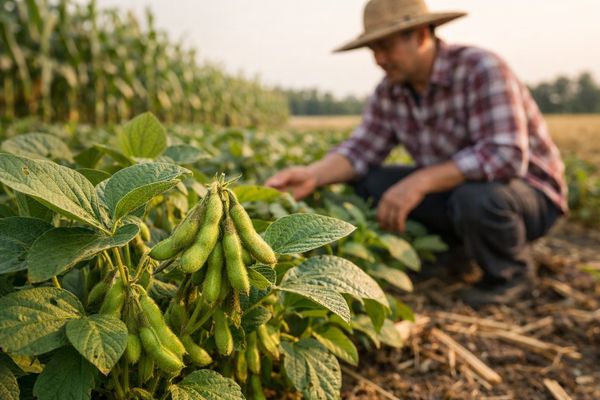
Vietnam’s rapid soybean crushing expansion is set to increase whole-bean imports and domestic soymeal and oil output, tightening competition among origins while capping growth in Vietnam’s meal and oil imports. For global traders, Vietnam shifts from a pure meal buyer toward a more complex bean, meal and oil hub in Southeast Asia.
Vietnam’s commissioning of two new crush lines in early 2026 transforms it into one of the more dynamic demand centers in the global soy complex. Whole-bean imports are projected to rise sharply over the next two marketing years, while meal imports flatten and oil imports decline as domestic output increases. Against a backdrop of record Brazilian crops and strong US planting intentions, this structural shift will matter most for origin competition, product spreads and regional basis rather than for outright flat prices.
[cmb_offer ids=381,380,739]
📈 Prices & Futures Structure
CBOT soybean futures volumes remain robust, with open interest hovering around 1.0 million contracts in mid-April, confirming active participation but without clear directional conviction. cite turn0news14 turn0news16 Recent desk commentary points to modest downside pressure from accelerated US planting and softer vegetable oil values. cite turn0search4
Physical indications in key origins show relatively steady but differentiated levels (FOB, converted to approximate EUR/kg):
| Origin | Type | FOB price (EUR/kg) | 1-week change |
|---|---|---|---|
| China (Beijing) | Yellow, non-organic | ~0.67 | +0.02 |
| China (Beijing) | Yellow, organic | ~0.74 | +0.01 |
| US (No. 2) | Bulk | ~0.57 | flat |
| India (sortex) | Premium | ~0.92 | flat |
| Ukraine | Standard | ~0.31 | -0.01 |
(Indicative values derived from recent USD offers and FX; all in EUR for comparability.)
🌍 Vietnam Demand Shock & Trade Flows
Vietnam has brought two new soybean crush lines online in Q1 2026, one in the north and one in the south, triggering a step-change in whole-bean demand. Soybean imports are forecast to climb from 2.61 million tonnes in 2025 to about 3.2 million tonnes in MY 2025/26 and 3.8 million tonnes in MY 2026/27, as plants ramp up toward 2.5 and then 3.0 million tonnes of annual crush, respectively.
Domestic soymeal production is projected to jump from 1.48 million tonnes in 2025 to 1.95 million tonnes in MY 2025/26 and 2.34 million tonnes in MY 2026/27. Yet total soymeal consumption is expected to grow faster, to 7.4 and 7.8 million tonnes in those years, leaving import needs broadly flat at around 5.7 million tonnes. This marks a shift from pure import dependence toward a hybrid model that blends local crushing with continued sizable meal imports.
📊 Products: Soymeal, Soyoil & Competing Oils
On the oil side, Vietnam’s crush expansion sharply reshapes balances. Domestic soybean oil output is forecast at 475,000 tonnes in MY 2025/26 and 570,000 tonnes in MY 2026/27, pushing soybean oil imports down from roughly 90,000 tonnes in 2025 to 60,000 and then 40,000 tonnes. At the same time, soybean oil exports are projected to rise to 200,000 tonnes in MY 2025/26 and 250,000 tonnes in MY 2026/27, with South Korea as the main external market.
Palm oil maintains its dominant share in Vietnam’s vegoil mix, with imports near 1.076 million tonnes in 2025 and a steady outlook at 1.2 million tonnes in MY 2025/26 and 2026/27. However, stronger domestic soybean oil supply and robust macro drivers – including 8% GDP growth in 2025 and nearly 15% expansion in food, beverage and lodging revenues – support gradual substitution toward soybean oil in food service and food processing channels.
🌱 Feed Demand, Livestock Risks & Policy
Feed demand is the primary engine behind Vietnam’s soymeal use. Poultry feed accounts for at least 80% of animal feed production, making broiler and layer dynamics crucial. Aquaculture, especially catfish, is the second pillar, with soymeal inclusion rates of 30–40% in rations. Total soymeal consumption is forecast at 7.4 million tonnes in MY 2025/26 and 7.8 million tonnes in MY 2026/27.
Livestock fundamentals are broadly constructive but not risk-free. In 2025, swine numbers grew modestly (0.3%) and poultry flocks expanded by 3%, yet African swine fever still poses a meaningful biosecurity threat after forcing culling of about 1.2 million hogs. In aquaculture, catfish fingerling prices in the Mekong Delta have doubled in early 2026, which could slow restocking and temporarily temper feed and soymeal demand into Q2 2026.
On the policy side, the elimination of the MFN tariff on soymeal and corn from March 31, 2025 lowers landed costs for US and South American supplies and improves arbitrage flexibility. A more ambiguous risk is the suspended food-safety Decree 46, which briefly disrupted trade before being put on hold. Its replacement within the Amended Food Safety Law, due for parliamentary debate in October 2026, could reintroduce procedural hurdles for oilseed and product imports.
🌦️ Weather & Global Supply Context
Globally, fundamentals remain supply-heavy. Brazil’s 2025/26 soybean harvest is widely expected to set or challenge a new record, with estimates pointing to a bumper crop that reinforces the country’s role as the largest exporter and a key supplier to Asian crushers. cite turn0search2 turn0search7 turn0search10 US farmers intend to expand soybean area in 2026, and early April reports show planting starting faster than usual in several key states, aided by favourable weather. cite turn0search0 turn0search8
Short-term weather risks now focus on whether US planting can maintain its rapid pace into late April and on precipitation patterns in southern Brazil and Argentina as their current season concludes. For Vietnam specifically, the main watch point over the next 30–90 days is not weather but the operational ramp-up of the new crush lines and associated logistics through northern and southern ports.
📌 Trading Outlook (6–12 Months)
- Soybeans (beans): Vietnam’s forecast increase in soybean imports to 3.2 and then 3.8 million tonnes over the next two marketing years underpins structural demand for whole beans in Asia, particularly from Brazil and the US. This should lend relative support to nearby FOB premiums in those origins, even within an overall well-supplied global market.
- Soymeal: With Vietnamese soymeal imports plateauing around 5.7 million tonnes despite rising total use, exporters should expect tougher competition and narrower margins into this destination. The zero MFN tariff enhances the competitiveness of US meal versus South American origins, making basis, freight and quality decisive in winning tenders.
- Soyoil & vegoils: Growing Vietnamese soyoil output and rising exports to regional buyers add incremental liquidity to the Asian vegoil market and could modestly pressure regional palm and sunflower oil spreads at the margin, especially in food-service channels.
📉 Key Risks to Monitor
- Operational ramp-up: Slower-than-expected utilisation of the new crush capacity would delay the projected uptrend in Vietnamese soybean imports and prolong higher soymeal import demand.
- Livestock disease & margins: A renewed African swine fever wave or weak hog and poultry margins could dampen feed demand, pulling soymeal consumption below current projections.
- Regulatory shifts: The October 2026 debate on the Amended Food Safety Law may reintroduce trade frictions for oilseeds, meal and oil if onerous inspection or documentation rules resurface.
- Macro & energy prices: Softer crude oil or global growth could cap vegetable oil values and limit upside in the soy complex despite robust physical demand.
📆 3‑Day Price Indications & Directional Bias (EUR)
- CBOT-linked soybeans (delivered EU, paper-equivalent): Sideways to slightly softer bias in the next 3 days as fast US planting and heavy South American supplies weigh on sentiment.
- FOB US Gulf beans: Stable to marginally weaker in EUR terms, with abundant supply offsetting incremental Asian demand.
- FOB Brazil (Paranaguá) beans: Mild downward pressure expected as harvest selling continues and competition for Vietnamese and Chinese demand remains intense.
- FOB Asia meal (ex-Argentina/US to Vietnam): Rangebound; structural Vietnamese demand provides a floor, but rising domestic crush and record Brazilian supplies limit upside.
[cmb_chart ids=381,380,739]
Related posts:
 Soybean Complex Firms on Record U.S. Crush While Oil Remains Heavy
 India’s Soybean Squeeze: Rising Imports, Weak Prices and New Global Flows
 Soy Complex Softens at Front but Meal-Led Support Limits Downside
 Argentine Soybeans: Fertilizer Shock, Policy Risks and Firm Crush Margins
 Kazakh and Russian Linseed Hold Steady as EU Duties Reshape Flows
 Sunflower market: stable seeds, firmer oils amid shifting crush and trade flows
 Soybean Market: Flat Futures, Firmer Meal and Mixed Global Cash Signals