
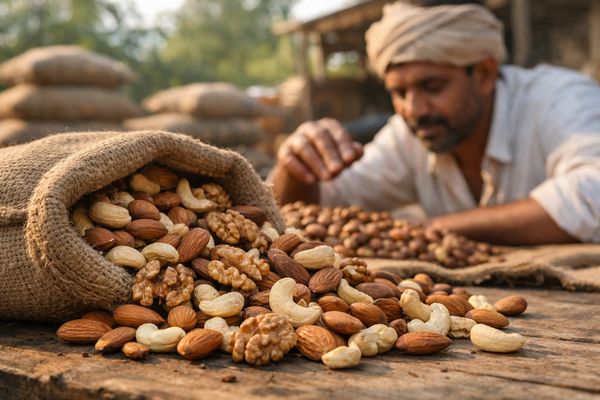
Pistachio and date prices in India have risen sharply on the back of West Asia tensions, with Iranian supply down and logistics through key trade corridors constrained, while domestic cashews and alternative imports like U.S. almonds are cushioning some of the shock. Overall, nuts and dry fruits are entering a phase of tighter supply, higher costs and shifting trade flows ahead of India’s peak festive demand window.
India’s dry fruit and nuts market is feeling the impact of geopolitical risk earlier than usual this year. Disrupted shipping routes around Iran and restrictions along regional trade corridors have cut Iranian pistachio and date availability by an estimated 30%, pushing import prices up roughly 10–20% in just two months. At the same time, global benchmarks for pistachios have climbed to multi‑year highs amid constrained Iranian exports and a still‑fragile situation around the Strait of Hormuz. While seasonal demand in India is currently subdued, traders expect supply tightness to collide with rising consumption from June onward, unless logistics normalise and alternative origins scale up in time.
Exclusive Offers on CMBroker

Brazil nuts
medium
FCA 6.50 €/kg
(from NL)
📈 Prices & Market Mood
India’s import prices for key Iranian-origin dry fruits, especially pistachios and dates, have increased by around 10–20% over the past two months as shipments slowed and freight costs climbed. This aligns with global moves: international pistachio prices have surged to their highest levels in about eight years, as Iran’s export channels remain partially blocked and buyers compete for reduced volumes.
Domestically, cashew prices are comparatively stable thanks to ongoing harvest arrivals, providing some relief for Indian consumers and processors. In Europe, spot prices for other tree nuts such as Brazil nuts remain flat, with recent FCA offers in the Netherlands holding steady around EUR 6.50/kg over the last month, highlighting how price pressure is currently concentrated in Iran-linked segments rather than across the broader nut complex.
🌍 Supply & Demand Shifts
Iran’s role as a core supplier of pistachios and dates has turned into a vulnerability for import-dependent markets. Export availability from Iran is estimated to be down by nearly 30%, driven by shipping disruptions, higher insurance and freight, and direct export restrictions. This loss is significant for India, where pistachio and date markets are valued at roughly USD 600 million and USD 360 million respectively, and where Iranian quality remains the consumer benchmark.
On the demand side, India is currently in a seasonally softer consumption phase, moderating the short‑term impact of higher prices. However, demand is expected to pick up from June as the country enters the pre‑festive build‑up, overlapping with rising needs for weddings and traditional gifting. Parallel evidence from Afghan-origin dry fruits being stalled at borders and pushing up local prices by around 15% underlines how multiple regional disruptions are amplifying the supply squeeze into India.
At the same time, structural demand is expanding beyond festivals. Quick-commerce and online grocery platforms are driving more frequent, smaller-ticket purchases of nuts and dry fruits for snacking and health-focused consumption. This creates a more persistent baseline demand that is less elastic to short-lived price spikes, potentially limiting the downside in volumes even as prices move higher.
📊 Market Fundamentals & Trade Flows
Fundamentally, the current move is logistics-driven rather than crop-failure-driven. Iran still accounts for roughly one‑fifth of global pistachio output and about a third of exports, so any disruption to corridor access or port operations rapidly tightens destination markets. The 2025/26 global tree nut balance was already forecast slightly tighter, with pistachio production projected to edge lower after a strong prior crop, leaving less buffer to absorb new shocks.
In response, Indian traders are actively diversifying. Imports of alternative nuts such as U.S. almonds are being increased where possible to fill shelf space and meet consumer budgets, even if they are not perfect substitutes for premium Iranian pistachios and dates. Informal and grey-market channels are reportedly emerging to circumvent bottlenecks, but closer monitoring around key transit points, including the Strait of Hormuz, is limiting their scale and reliability.
For now, domestic cashew availability is cushioning the system. But rising global freight costs linked to the same regional conflict, and the risk of a weaker Indian monsoon later in the year, could eventually filter into higher cashew prices as well, particularly if export interest strengthens or local crop prospects are revised down.
🌦️ Weather & Macro Context
The macro backdrop is dominated by the Iran-related conflict and intermittent restrictions around the Strait of Hormuz, which have already been described as one of the largest recent disruptions to commercial shipping and energy supply. This spillover into freight and insurance has a direct cost effect on bulky, relatively low‑value products such as nuts and dried fruits, compounding the impact of export bans and route closures.
Weather for major competing nut origins such as California (pistachios, almonds) and Turkey (hazelnuts) is currently not the primary driver of the price spike, though there are scattered concerns about heat and water availability. Any significant weather shock later in 2026 could turn the present logistics‑driven spike into a more structural tightness by cutting into new‑season crops just as trade routes remain fragile. For India, forecasts of a potentially weaker monsoon raise a medium‑term risk for domestic nut crops, especially cashew, but this has not yet translated into visible price stress.
📆 Outlook & Trading Focus
Looking ahead to the next 3–6 months, the key inflection point will be whether regional logistics normalise before India’s festive demand ramps up. If Iranian exports remain constrained into late Q2, the current 10–20% price gains on imported pistachios and dates could extend or even accelerate as buyers secure coverage for Diwali and year‑end festivals. Conversely, a sustained reopening of trade corridors could cap further upside, though price retracement may be limited by higher baseline freight and insurance.
Domestic cashews are likely to remain relatively stable in the near term, with gradual upside risk if monsoon expectations deteriorate or if substitution from higher‑priced imported nuts strengthens local demand. Alternative origins (e.g. U.S. almonds, non‑Iranian pistachios) will play a larger role in Indian and European blends, but quality and taste preferences mean they will only partially displace Iranian product in premium segments.
💡 Strategic Pointers for Market Participants
- Importers/Wholesalers (India & EU): Lock in core pistachio and date volumes early for Q3–Q4 needs, diversifying origins where possible; use staggered hedging rather than waiting for a clear resolution of the conflict.
- Retailers & Brand Owners: Adjust pack sizes and product mix (greater emphasis on almonds, cashews, mixed nuts) to maintain price points and manage consumer sticker shock while preserving margins.
- Industrial Users (bakery, confectionery): Explore recipe flexibility—partial substitution of pistachios/dates with other nuts or inclusions—while pre‑booking premium grades that are harder to replace.
- Producers & Exporters in Alternative Origins: Capitalise on the window to gain market share in India and Europe, but avoid overcommitting volumes given the uncertainty around the duration of trade disruptions.
📍 Short-Term Directional View (3 Days)
| Market/Exchange | Product | 3-Day View (EUR) | Comment |
|---|---|---|---|
| India (import parity) | Pistachios (Iran origin) | Sideways to slightly higher | Supply remains tight; no immediate relief expected as logistics stay constrained. |
| India (import parity) | Dates (Iran origin) | Sideways | Low seasonal demand tempers further near‑term gains despite restricted flows. |
| India domestic | Cashews | Stable | Harvest arrivals support supply; macro freight risks not yet feeding into spot levels. |
| EU (Netherlands FCA) | Brazil nuts | Stable around recent offers (~EUR 6.50/kg) | Detached from Iran-linked disruptions; no fresh drivers over the next few sessions. |
Related posts:
 Walnut Market Softens in India as Import Pressure Weighs on Prices
 Indian Cashew Kernels Edge Higher as Tight Raw Nut Supply Caps Downside
 Pistachio Kernels Tighten as Shipments Outpace Supply
 Indian peanut prices firm as weather and oilseed outlook tighten
 Walnut Market 2026: Strong California Shipments Meet Persistent Price Pressure