
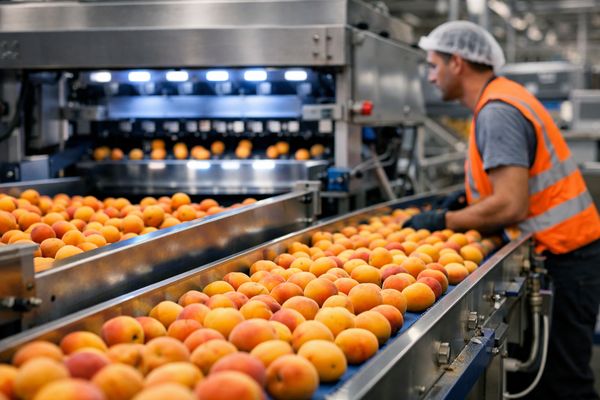
European apricot supply in 2026 is recovering, with output forecast up 6% year-on-year to around 505,320 tonnes, but weather during flowering means the crop will not reach its full potential. Prices for Turkish dried apricots in Europe are slightly softer, while fresh markets face the prospect of adequate headline supply but possible tightness in premium calibres.
European apricot production is rebounding from last season’s weather-hit crop, yet structural acreage decline and spring frosts keep a lid on true capacity. Southern origins will open the fresh campaign with more volume than in 2025, but rain and wind during flowering have curbed fruit set, particularly in upgraded orchards such as Catalonia. At the same time, the stone fruit sector continues to shift towards later, more technical production systems, reshaping seasonal availability and quality profiles for both fresh and processing buyers.
Exclusive Offers on CMBroker

Apricots dried
Cubes, no - 8
FCA 5.52 €/kg
(from NL)

Apricots dried
Cubes, no - 6
FCA 5.95 €/kg
(from NL)
Apricots dried
Cubes, no - 5
FCA 6.00 €/kg
(from NL)
📈 Prices & Current Market Tone
Turkish dried apricot prices in Europe show a mildly softer tone at the start of May. FCA Dordrecht offers for conventional cubes from Turkey currently cluster around:
| Product | Location / Terms | Latest Price (EUR/kg) | 1–2 Week Change |
|---|---|---|---|
| Apricots dried, cubes no. 8 | NL, FCA | €5.52 | −€0.05 |
| Apricots dried, cubes no. 6 | NL, FCA | €5.95 | −€0.05 |
| Apricots dried, cubes no. 5 | NL, FCA | €6.00 | −€0.05 |
| Apricots dried, cubes 8–10 mm | NL, FCA | €3.30 | −€0.05 |
FOB Malatya prices for whole dried types are broadly steady, with unsulphured sizes trading in a roughly €7.80–€8.65/kg range for conventional lots and around €9.30–€10.35/kg for organic, depending on calibre and sulphuring. Slight easing in European cubes suggests comfortable nearby availability and some buyer resistance at previous highs.
🌍 Supply & Demand: More Fruit, But Below Potential
European apricot production in 2026 is forecast at 505,320 tonnes, 6% above 2025 and around 4% above the 2020–2024 average. This aligns with recently published Europech figures presented at the Medfel Fair in Perpignan, which highlight a recovery from last season’s sharp weather-related drop.
However, the season again falls short of its agronomic potential. Episodic spring frosts and prolonged wet conditions during flowering have limited fruit set across several regions, including parts of Spain and France. Catalonia, where older orchards have been converted to higher-yielding varieties at unchanged area, is emblematic: despite technical upgrades, rain and wind during pollination have kept expected gains from materialising, leaving output broadly flat versus last year.
Greece stands out as the only major EU producer projected to reach normal production levels in 2026, while Spain, France and Italy remain below what their planted area and technology could theoretically deliver. Across the wider stone fruit sector, a long-term decline in acreage is underway, partially offset by higher yields, improved varieties and more intensive management.
📊 Fundamentals & Structural Change
Behind the 2026 recovery sits a deeper structural adjustment. Total apricot and broader stone fruit area in Europe is trending lower, driven by ageing grower demographics, weak generational succession and the higher capital and technical requirements needed to cope with climatic volatility and demanding buyers. The emerging model features higher planting densities, more mechanisation, anti-hail nets and greater use of agronomic technology, but adoption is uneven.
This bifurcation is creating two distinct producer profiles. On one side, modernising operations are investing in climate-resilient varieties that require fewer chilling hours, offer better firmness and support longer shelf life and extended-season programs. On the other, farms facing capital and labour constraints struggle to keep pace and are at greater risk of exit, reinforcing the overall downtrend in planted area even as per-hectare productivity rises.
Varietal innovation is also reshaping calendars. Later-maturing and flat-type hybrids such as platerinas extend the stone fruit season, encouraging a shift of apricot supply towards later summer windows. For buyers, this implies structurally tighter early-season availability alongside more concentrated late-season volumes.
🌦 Weather & Short-Term Risks
Weather was less damaging than in 2025 but still far from benign. Spring frosts and very rainy flowering periods have already curtailed the 2026 crop’s potential, particularly in continental basins and parts of Spain and France. Europech forecasts acknowledge that actual harvested volumes could end up somewhat below initial estimates if lingering uncertainties in France materialise.
In Turkey’s Malatya region, the key global origin for dried apricots, recent forecasts have flagged episodes of strong thunderstorms and localised hail in early May, following a period of cool, variable spring conditions. While current European dried offers suggest no immediate supply shock, continued convective storms during the critical fruit development phase would represent an upside risk for prices later in the year if damage becomes widespread.
🌐 Trade Flows & Competing Origins
On fresh markets, European apricots compete with North African supply — chiefly Morocco and Tunisia — in early windows, while Turkish production exerts more influence over processing and dried segments. As European acreage contracts and weather volatility persists, import competition during intra-seasonal gaps is likely to intensify, especially in years when frost or heavy rain push EU output below expectations.
For dried apricots, Turkey retains its dominant role, with Malatya and other Anatolian basins shaping global availability. With EU fresh production moving towards later-season peaks and with quality variability reducing the share of large-calibre fruit suitable for premium channels, some incremental volumes may divert into processing streams. This could modestly cushion dried markets in the near term, provided Turkish orchards avoid major weather shocks.
📆 Market Outlook & Trading Recommendations
Over the next 30–90 days, early European apricot shipments from southern origins will ramp up. While aggregate volume should exceed last year’s levels, weather-related fruit set losses are likely to limit the proportion of large, visually attractive fruit, tightening effective supply for top-tier retail programs. Buyers should closely track pack-out ratios and size curves from Spanish and French packhouses as the season opens.
Over a 6–12 month horizon, the direction of travel remains clear: lower planted area, higher per-hectare productivity and a continued shift towards later-season availability. Extended-season, climate-adapted cultivars will gradually smooth some of the volatility, but they will also redefine traditional sourcing calendars. Procurement strategies that once relied on abundant early-season European apricots will need to adapt, incorporating more flexible windows and a greater role for non-EU origins in shoulder periods.
🧭 Trading Outlook: Key Moves
- Fresh buyers (retail/foodservice): Secure programs early for large-calibre fruit in June–July, with quality clauses reflecting increased variability; keep spot capacity for opportunistic later-season buying when concentrated volumes may pressure prices.
- Processors (puree, canning, industrial): Expect adequate raw material availability but variable quality; consider forward contracts at current levels to hedge against potential weather issues in Turkey or further EU downgrades.
- Dried apricot importers: With FCA EU cube prices slightly softer and FOB Turkish quotes stable, stagger purchases over Q2–Q3 rather than front-loading, but maintain weather-watch triggers for Malatya to accelerate buying if significant damage reports emerge.
📍 3-Day Directional Outlook (EUR-based)
- EU fresh apricot wholesale (southern origins): Steady to slightly softer as first volumes build, but premiums for large calibres likely to persist.
- Dried apricot cubes, FCA NL: Mildly weak tone; prices around €5.50–€6.00/kg are expected to hold with limited downside near term.
- Whole dried apricots, FOB Turkey: Largely stable in the €7.80–€8.70/kg band for conventional unsulphured/sulphured sizes; short-term moves will hinge on any further severe weather in Malatya.
Related posts:
 Turkish Dried Apricots Ease Slightly as EU Demand Stays Cautious
 Turkish Dried Apricots: Prices Flat but Weather and Low Crop Cap Upside
 Turkish Dried Apricots Hold Firm as Market Watches Late-April Weather
 Dried Papaya from Thailand and Vietnam: Marginal Softening but Overall Stability
 Tight Stocks, Weather Risks: Turkish Dried Apricots Hold Firm at High Levels
 Dried Apricots TR: Firm FOB Malatya Prices, Weather Risk on Watch