
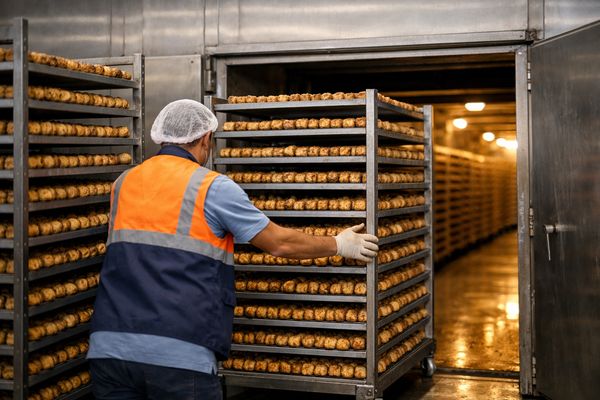
Turkish dried figs are closing the first quarter of 2026 with solid export revenues but a clearly more challenging quality and regulatory environment in Europe. Despite being one of the top earners in Turkey’s dried fruit basket, figs face pressure from EU border rejections, which is likely to shape both risk perception and pricing in the new season.
The sector as a whole generated over EUR 375 million in Q1 2026 (USD 404.5 million), confirming Turkey’s role as a key global supplier. Dried figs contributed around EUR 90 million, second only to seedless raisins. Europe remained the main outlet with almost half of total dried-fruit revenues, led by Germany, the UK, the US and France. However, the return of significant volumes of figs from EU borders due to quality and safety non‑compliance has darkened sentiment and could force growers and packers to tighten controls ahead of the 2026/27 crop.
Exclusive Offers on CMBroker

Figs dried
no: 7, lerida
FOB 7.60 €/kg
(from TR)

Figs dried
no: 6, natural
FOB 7.80 €/kg
(from TR)

Figs dried
no: 5, natural
FOB 8.20 €/kg
(from TR)
📈 Prices & Current Market Mood
FOB Malatya prices for Turkish dried figs are currently stable across calibres, with natural and Lerida types broadly flat between 1 and 28 April 2026. After some adjustments in mid‑April, quotations have consolidated, suggesting that the market is in a wait‑and‑see phase while exporters assess the real impact of EU rejections on demand and risk premiums.
| Product | Type / Size | Location / Term | Price (EUR/kg, FOB) |
|---|---|---|---|
| Dried figs | Natural No: 6–1 | TR Malatya, FOB | 7.80 – 9.60 |
| Dried figs | Lerida No: 7–1 | TR Malatya, FOB | 7.40 – 10.00 |
Price spreads between smaller (No: 6–7) and larger (No: 1–2) sizes remain typical, but the lack of upward movement in late April hints at cautious buying from EU importers. For now, the market appears balanced: exporters are not rushing to discount, while buyers are testing quality and tightening specifications rather than aggressively restocking.
🌍 Supply, Demand & EU Quality Tensions
In the broader dried fruit complex, raisins still lead Turkey’s export earnings in Q1 2026, but figs follow closely with USD 97 million, underlining their strategic importance within the country’s agricultural exports. Europe absorbs the largest share of Turkish dried fruit, with around USD 176.9 million in Q1 sales to the region and Germany as the leading destination. This concentration of demand amplifies the impact when EU authorities intensify controls on specific product groups.
For dried figs, the 2025/26 campaign has been labelled as not very bright despite robust value figures, mainly because Europe sent back a noticeable volume from the border. The underlying issue is food safety, particularly aflatoxin contamination and related EU regulatory scrutiny, where dried figs are a known high‑risk category. Recent industry analysis confirms that aflatoxin non‑compliance remains a key trigger for EU rejections and re‑exports in this segment, forcing Turkish suppliers to reassess pre‑shipment controls and documentation.
At the same time, global dried fig fundamentals are reasonably firm. New supply–demand estimates for 2025/26 point to an expanding world crop, with Turkey’s production forecast to rise from about 60,000 t to roughly 70,000 t and world availability climbing to over 170,000 t. Consumption is also projected higher but still lagging total supply, implying a modest rebuild of ending stocks. This combination of adequate supply and slightly softer demand in some mature markets helps explain why prices have stabilized rather than rallied, even as exporters face higher compliance costs.
📊 Fundamentals & Weather Outlook
Structurally, Turkey remains by far the dominant player in the global dried fig trade, with Iran, Afghanistan, Spain and Greece as secondary suppliers. The heavy reliance on EU outlets, especially for higher‑value calibrated figs, makes the sector particularly sensitive to any tightening in European controls. Customs and sanitary procedures under HS 0813 already impose mandatory checks; risk‑based targeting for figs can further increase inspection frequency, delays and costs.
The new season outlook will depend strongly on orchard conditions in the Aegean fig belt (notably Aydın and surrounding provinces). Recent agronomic work confirms the sensitivity of Sarılop figs to temperature and moisture patterns between bud‑break and fruit maturation, emphasising the need for careful orchard management as climate variability increases. So far, pan‑European crop bulletins describe overall favourable conditions for many field crops, with some emerging moisture deficits in parts of central and eastern Europe but no major shock signals for Mediterranean perennials. For Turkish fig growers, this translates into a cautiously optimistic weather backdrop, yet last year’s frost experience keeps risk perceptions elevated.
On the domestic macro side, Turkey’s wider trade balance remains under pressure, making agricultural exports—figs included—politically and economically important. This context is likely to support continued policy backing for export‑oriented sectors, but it also raises expectations that growers and packers will address recurring compliance issues to safeguard market access, especially in the EU.
📆 Trading & Risk Management Outlook
- For EU importers: Keep a strict focus on supplier selection, origin controls and lot‑by‑lot aflatoxin testing. Given the recent returns from EU borders, it is prudent to negotiate tighter specifications, clear penalty clauses for non‑compliance and flexible shipment schedules.
- For Turkish exporters: Prioritise investment in HACCP‑based quality systems, pre‑harvest and pre‑shipment testing, and transparent documentation. In the short term, maintaining price stability near current FOB levels while proving consistent quality is more valuable than chasing marginal price gains.
- For processors and packers: Consider segmenting product lines between higher‑risk bulk and lower‑risk premium or organic segments, with differentiated testing and certification regimes. This can help optimise costs while aligning with the most demanding EU customers.
- For growers: Upcoming decisions on orchard practices (irrigation, harvest timing, on‑farm sorting and drying) should be guided by the heightened scrutiny on aflatoxins and mould. Close collaboration with export packers over field inspections and training will be key ahead of the 2026/27 crop.
📉 Short‑Term Price Direction (Next 3 Days)
- FOB Malatya, natural figs (No: 5–1): Prices likely to remain in the EUR 8.20–9.60/kg band, with a neutral to slightly soft tone if additional EU buyers delay purchases.
- FOB Malatya, Lerida figs (No: 5–1): Expected to trade broadly sideways around EUR 8.00–10.00/kg; any discounts are more likely to be offered selectively on lower‑grade or higher‑risk lots.
- Overall: Market sentiment is cautious but not panicked. In the absence of fresh regulatory shocks or weather events, a stable price corridor with limited intraday volatility is the most probable scenario through the coming days.
Related posts:
 Turkish Dried Fig FOB Malatya Prices Flat as Weather Stays Supportive
 Turkish Dried Apricots: Prices Flat but Weather and Low Crop Cap Upside
 Turkish Dried Figs: Flat FOB Malatya Prices as Buyers Trade Hand‑to‑Mouth
 Turkish Dried Apricots: Firm Malatya FOB, Weather Risk Keeps Market Alert
 Stable Dried Apple Prices as Turkish Weather Risk Stays Contained
 Spain’s New China Access Reshapes the Global Dried Fig Market