
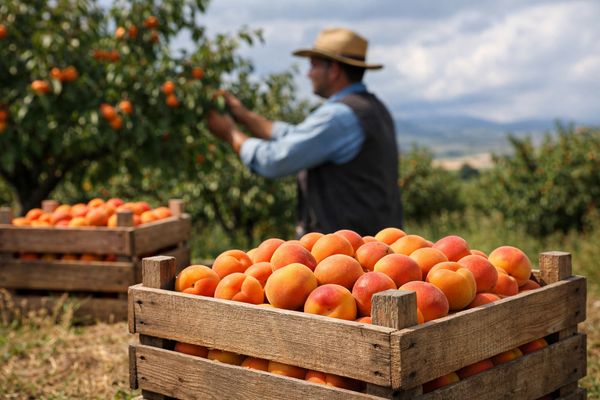
Turkish dried apricot prices are flat to slightly firm in late April, with FOB Malatya offers and EU warehouse cubes trading in a narrow range and no fresh upside break. Currency support from a weak lira and comfortable nearby coverage for European buyers are keeping EUR-denominated values stable over the coming days.
Market activity remains calm, with most importers well covered and hesitant to extend long positions before the new crop outlook becomes clearer. Processors in Malatya report steady export interest but no surge in spot buying, while the key risk factor in the very short term is late-April weather during the sensitive post-bloom period. With no major frost event reported so far, the base case is for sideways pricing into early May unless demand unexpectedly accelerates.
Exclusive Offers on CMBroker

Apricots dried
no:8, TR-1123
99,97%
FCA 5.15 €/kg
(from PL)

Apricots dried
Cubes, no - 8
FCA 5.57 €/kg
(from NL)

Apricots dried
Cubes, no - 6
FCA 6.00 €/kg
(from NL)
📈 Prices & Spreads
Dried apricot prices from Turkey are broadly unchanged compared with mid‑April. Recent market commentary confirms that FOB Malatya and Ankara offers for standard sulphured No.4–5 grades are holding around EUR 8.0–8.2/kg, consolidating the gains seen earlier in the season and trading in a tight band.
EU‑warehouse Turkish cubes in the Netherlands are also quoted in a narrow range, with typical levels around EUR 5.6–6.5/kg depending on cut size, in line with the latest FCA Dordrecht indications. The spread between FOB Turkey and EU stocks is largely explained by logistics and warehousing costs, with no sign yet of aggressive discounting from traders.
| Product | Location & Term | Grade / Form | Indicative Price (EUR/kg) | Short‑term Trend |
|---|---|---|---|---|
| Dried apricots | FOB Malatya (TR) | No.4–5 sulphured | 8.0–8.2 | Stable |
| Dried apricots | FOB Malatya (TR) | No.3–4 unsulphured | ≈8.0–8.5 | Stable/Firm |
| Dried apricot cubes | FCA Dordrecht (NL) | Cubes No.4–6 | ≈6.0–6.2 | Stable |
| Dried apricot cubes | FCA Dordrecht (NL) | Cubes No.8 | ≈5.5–5.6 | Stable |
🌍 Supply, Demand & Weather
Turkey remains the dominant global origin for dried apricots, supplying the bulk of world export demand, particularly to Europe, North America and parts of Asia. Exporters in Malatya report that most core European buyers are already well covered for nearby shipments, leading to only light spot inquiries and a “pause phase” in new business.
On the supply side, Malatya’s orchards have moved through full bloom, and imagery from early April shows normal blossom development across the region. Unlike the severe frosts that hit Turkish apricot trees in April 2025, no significant frost damage has been reported in the last days, although growers remain cautious given the known vulnerability of apricot blossoms to late cold snaps.
External signals from other producing and consuming regions are mildly supportive. Ukraine, a smaller but regionally important source of fresh apricots, is facing sizeable frost-related losses in its 2026 crop, with some regions expected to lose more than half of flower buds; this is already prompting talk of sharply higher local apricot prices and could indirectly bolster Turkish export demand later in the season.
📊 Fundamentals & Currency Backdrop
Fundamentals currently point to a balanced to slightly tight global dried apricot market. Earlier frost damage in 2025 reduced stocks and helped keep Q1 2026 prices elevated, while ongoing health‑driven demand growth for dried fruits supports baseline consumption, especially in Europe’s snacking and ingredient segments.
The currency environment remains a decisive factor. The Turkish lira continues to trade weak against the euro, around TRY 52–53 per EUR in late April 2026, cushioning EUR‑based buyers from the full impact of local inflation in Turkey and supporting the competitiveness of Turkish FOB offers. As a result, Turkish exporters can maintain firm local‑currency returns while leaving euro‑denominated price lists largely unchanged, reinforcing the current sideways pattern.
🌦 Weather Outlook (Region: TR / Malatya)
Short‑term weather models for eastern Turkey indicate relatively mild and seasonally normal conditions for Malatya over the next three days, with no severe frost events in the forecast window. Daytime temperatures are expected to stay comfortably above freezing, significantly lowering the probability of late cold damage to already‑bloomed apricot orchards.
Given the sensitivity of apricot trees to sub‑zero temperatures during and shortly after bloom, growers will continue to monitor night‑time lows. However, if current forecasts verify, weather should remain a neutral to slightly supportive factor for supply expectations, helping to cap any immediate weather‑driven price spike.
📆 Short-Term Price Outlook (3 Days)
With physical trade quiet, positions well covered and no new weather shock visible, the most likely scenario for the next three trading days is a sideways market in EUR terms. Any moves are expected to remain within the current narrow corridor around existing FOB Malatya and FCA EU levels.
- FOB Malatya (TR) – standard sulphured No.4–5: Sideways; prices expected to hold near EUR 8.0–8.2/kg.
- FOB Malatya (TR) – unsulphured mid‑grades: Sideways to slightly firm on limited offers; range around EUR 8.0–8.5/kg.
- FCA Dordrecht (NL) – Turkish cubes: Stable; indicative band EUR 5.5–6.5/kg depending on cut size.
💡 Trading Outlook & Recommendations
- Importers (EU): With prices flat and weather risk diminishing, consider covering near‑term Q2 needs now while spreads are narrow, but avoid over‑extending into Q4 until clearer signals on the 2026 crop size and demand recovery emerge.
- Turkish exporters: Maintain current EUR offers and target selective forward sales; a weak lira and limited competition support holding price discipline rather than discounting.
- Industrial users / packers: Where recipes allow flexibility between sulphured and unsulphured grades, monitor any emerging premium shifts; current indications suggest only modest differentials, offering room to balance quality and cost.
Related posts:
 Turkish dried apricots: FOB Malatya flat, cubes steady in Europe as market waits on April weather
 Tight Stocks, Weather Risks: Turkish Dried Apricots Hold Firm at High Levels
 Turkish Dried Apricots: Firm Malatya FOB, Weather Risk Keeps Market Alert
 Dried Apricots TR: Firm FOB Malatya Prices, Weather Risk on Watch
 Raisin Prices Hold Firm as India Faces Heatwave and Turkey Watches the Skies
 Turkish Dried Apricots: Firm Prices, Weather-Watch in Malatya